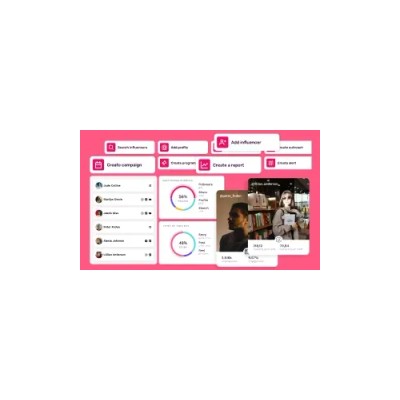
About Influencity
Influencity positions itself as an end-to-end influencer marketing platform that certainly has the ambition to cover all bases in the influencer realm. With a staggering database of over 200 million influencer profiles across major platforms like Instagram, YouTube, TikTok, and Twitter, the tool offers a treasure trove of audience analytics that goes well beyond basic follower counts. You can drill down into specifics like demographics, location breakdowns, and—thankfully—fake follower detection, which is crucial in this industry. Let's be honest, no one wants to waste their budget on influencers with inflated follower numbers.
One feature that really caught my attention is the advanced search filters. You can fine-tune your search by niche, engagement rate, audience age, language, and even brand affinity. It's all about finding the perfect match for your campaign, and Influencity delivers on that front. The platform doesn’t stop at just discovery; it manages the entire campaign workflow from shortlisting influencers to outreach, contract management, and performance reporting. The campaign dashboards provide real-time tracking of reach, impressions, engagement, and even earned media value, which can be a lifesaver when you're trying to justify your spending to the higher-ups.
However, the pricing might give you pause if you’re a small business or a freelancer. The Starter plan begins at $168 per month, which is a bit steep if you’re just dipping your toes into influencer marketing. For $348 per month, the Professional plan offers additional profiles and team collaboration features, which is great if you have a larger operation. But for those on a tighter budget, there are more affordable tools out there that can still get the job done. Overall, Influencity is a powerful tool, but it’s probably best suited for mid-sized to larger brands that have the budget and the need for comprehensive influencer management.
In essence, Influencity shines in its ability to analyse and manage influencer campaigns, but it may not be the best fit for everyone, especially if you’re just starting out or only need basic features. If you have the budget and are serious about influencer marketing, it could be worth the investment, but if you’re a small player, you may want to explore other options first.
Our Review
Verified 11 May 2026Reviewed by Delv Editorial, Delv Team
When I first got my hands on Influencity, I was immediately struck by the sheer size of its influencer database. Over 200 million profiles? That’s a lot of creators to sift through! For anyone serious about influencer marketing, this is a treasure trove. I spent a good chunk of my afternoon playing around with the search filters, narrowing down by niche and engagement rate, and I was impressed by how precise I could get with my results. It’s like having a superpower for finding the right influencers who genuinely match my target audience.
What stood out most to me was the audience analytics. I was particularly interested in the fake follower detection feature. I’ve seen too many brands throw money at influencers who boast inflated numbers, and it’s refreshing to find a tool that helps weed those out. The campaign dashboards are another highlight; I could track metrics in real-time and see how my campaigns were performing without having to wait for reports to trickle in. This is crucial when you are trying to make data-driven decisions on the fly.
However, it’s not all sunshine and rainbows. The pricing is quite steep, starting at $168 per month for the Starter plan. This might be a bitter pill to swallow for small businesses or freelancers just dipping their toes into influencer marketing. I can’t help but think that there are other tools out there that offer decent features for a fraction of the cost. Plus, I found the interface a bit overwhelming at times. If you’re not familiar with influencer marketing, you might find yourself struggling to navigate through all the options and features.
In comparison to competitors like Upfluence and AspireIQ, Influencity does have some unique features, but it lacks the user-friendliness of other platforms. Upfluence, for instance, feels more intuitive and might be a better fit for smaller teams or those just starting out. On the flip side, if you're managing larger campaigns and need a tool that can handle everything from discovery to reporting, Influencity is definitely worth considering.
In the end, I’d say Influencity is perfect for marketing teams at mid-sized to larger brands who need a comprehensive influencer marketing solution. If you’re a small business or a freelancer, you might want to hold off until you’re ready to invest more into your influencer strategy. Just be prepared for a bit of a learning curve and the reality that you’ll need to budget for it. Overall, Influencity has a lot to offer, but it’s not for everyone.
Getting started with Influencity
In this guide, you will learn how to set up your Influencity account and discover how to effectively find and manage influencers for your marketing campaigns. By the end, you'll be ready to analyse audience demographics and track campaign performance.
Step 1: Sign up and set up
Step 2: Your first influencer search
Step 3: Get better results
Pro tip
Utilise the “Compare Influencers” feature to assess multiple influencers side by side. This can save you time by quickly identifying the best fit for your campaign.
Common mistake to avoid
Avoid solely relying on follower counts when selecting influencers. Focus on engagement rates and audience demographics to ensure you’re reaching the right audience for your brand.
The Verdict
Influencity is a solid choice for brands serious about influencer marketing, offering extensive features for discovering and managing campaigns. However, its steep pricing may not make it the best fit for smaller businesses or new marketers. If you have the budget and a robust influencer strategy, it’s worth a look; otherwise, you might want to explore more affordable alternatives.
Best For
- Marketing teams at mid-sized to large brands looking for comprehensive campaign management.
- Agencies managing multiple influencer clients who need detailed analytics and reporting.
- E-commerce brands wanting to leverage influencer partnerships for increased sales.
- Social media managers responsible for sourcing and vetting influencers.
- PR professionals seeking to create buzz and manage relationships with influencers.
At a Glance
Influencity is a comprehensive influencer marketing platform that helps brands discover creators, analyse audience demographics, and manage campaigns across social media. With advanced search filters and real-time performance tracking, it’s ideal for brands looking to optimise their influencer collaborations. However, its pricing may be a hurdle for smaller businesses.
Strengths
- +The extensive database of over 200 million influencer profiles allows for highly targeted searches, making it easier to find the right creators for your brand's needs.
- +Detailed audience analytics, including demographics and fake follower detection, ensure you're investing in influencers who can genuinely deliver results.
- +The real-time campaign dashboards track essential metrics like reach, impressions, and engagement, which is critical for evaluating the effectiveness of your campaigns.
- +Custom lists and labels enable efficient organisation of influencers, making it simple to manage multiple campaigns simultaneously.
- +The platform's end-to-end campaign management features streamline the entire process from influencer outreach to performance reporting, saving time and effort.
- +The ability to export data for presentations adds professionalism and clarity when reporting results to stakeholders.
Limitations
- -The pricing is on the higher end, starting at $168 per month for the Starter plan, which may deter freelancers or small businesses with limited budgets.
- -While the platform offers many features, it can feel overwhelming for users who are new to influencer marketing, with a steep learning curve involved.
- -The mobile experience is less than stellar, with some features missing compared to the desktop version, which could limit usability on the go.
- -There's a lack of advanced automation features, which could save time for larger teams managing multiple campaigns.
- -Customer support can be slow at times, which is frustrating when you're in the middle of a campaign and need immediate assistance.
Use Cases
- -Marketing teams of mid-sized brands looking to run targeted influencer campaigns to boost product launches and brand visibility.
- -Agencies managing multiple clients who need a comprehensive view of influencer performance across various campaigns.
- -E-commerce businesses wanting to leverage influencer partnerships to drive traffic and sales through social media.
- -Social media managers tasked with finding and vetting influencers as part of their overall digital marketing strategy.
- -PR teams aiming to create buzz around new products using influencers who genuinely resonate with their target audience.